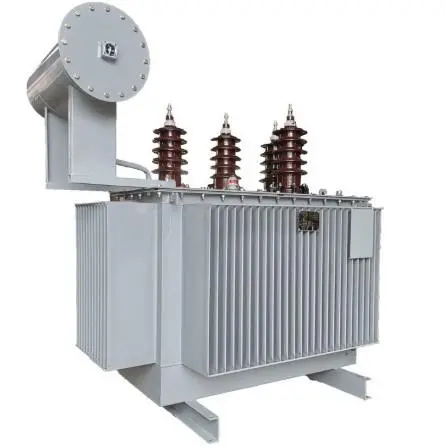
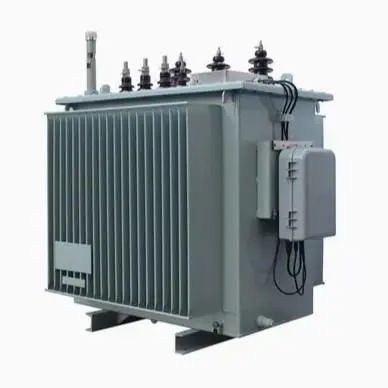
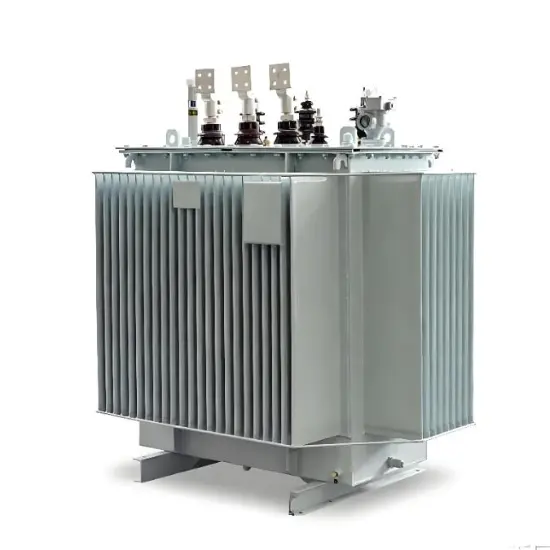
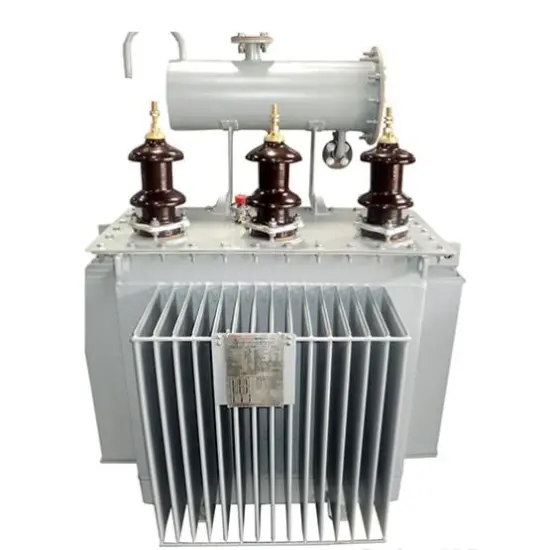
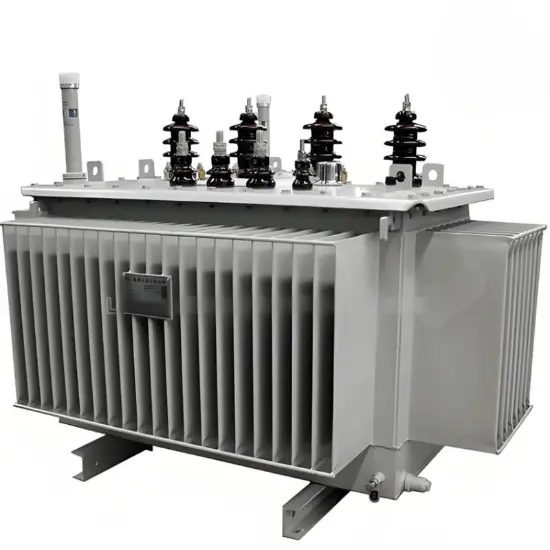
Medium-Voltage Oil-Immersed Power Transformers: Core Hubs for Modern Grid Stability and Renewable Integration
As the critical component for energy conversion and isolation in distribution networks, medium-voltage (MV) power transformers—typically rated between 10–35 kV—are evolving from conventional power transfer units into strategic assets that underpin grid resilience, renewable integration, and digital transformation.
Leveraging unique capabilities in voltage regulation, harmonic mitigation, fault isolation, and efficiency optimization, modern MV transformers are being enhanced with intelligent sensing, adaptive cooling, predictive maintenance, and low-carbon materials—transforming them from “passive equipment” into “active grid nodes.” Based on the latest IEC/IEEE standards and validated application scenarios, this solution proposes optimal configurations and intelligent enhancement strategies for MV transformers in next-generation power systems, aiming to improve supply reliability, reduce lifecycle costs, and accelerate sustainable grid development.
1.Technical Features and Core Advantages of MV Power Transformers
1.1 Core Design Philosophy
- Enhanced Voltage Stability: Dynamic voltage regulation and low-impedance design maintain bus voltage within ±3%, ensuring uninterrupted operation of sensitive loads (e.g., semiconductor fabs, data centers).
- Harmonic & THD Suppression: Special winding arrangements and magnetic shielding effectively attenuate 3rd/5th/7th harmonics, reducing total harmonic distortion (THD) by 40–60%.
- Renewable-Energy Friendly Integration: Supports inverter-dominated grids with low short-circuit ratios, preventing voltage collapse or relay misoperation in weak-grid conditions.
- High Efficiency & Low-Carbon Operation: Achieves IE4 ultra-premium efficiency, reducing no-load losses by 18–22% compared to IE2—saving up to 15,000 kWh/year per unit (for a 2 MVA transformer).
- Fault Isolation & Selective Protection: Enables millisecond-level fault localization and isolation when coordinated with intelligent relays, reducing outage footprint by up to 70%.
- Extended Lifespan & Asset Resilience: Advanced insulation systems (e.g., ester oil + aramid paper or H-class epoxy) extend design life from 15 to over 25 years, especially in high-humidity, high-salinity coastal environments.
1.3 Technical Configuration Classification
| Type | Key Features | Performance Highlights | Typical Applications |
|---|---|---|---|
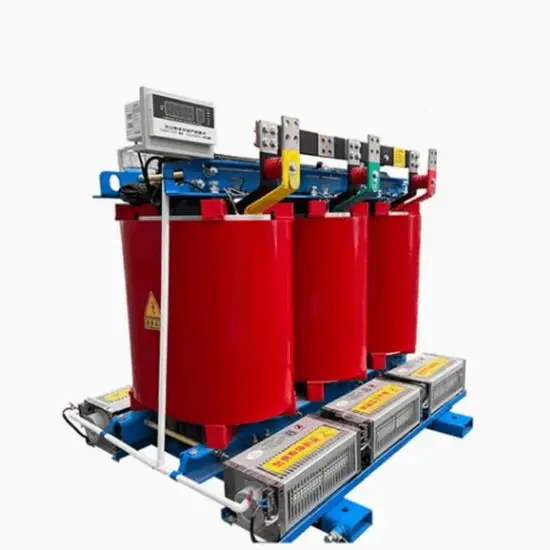
| Cast-Resin Dry-Type | Oil-free, vacuum-cast epoxy; IP54/IP55 protection | Fire-safe, maintenance-free, moisture-resistant; impedance 4–6% | Data centers, hospitals, high-rises, underground substations |
| Oil-Immersed (Mineral/Ester Oil) | Oil-paper or oil-aramid insulation; conservator or sealed tank | Superior cooling, high overload capacity (150% for 2h); optional OLTC | Industrial parks, wind/solar step-up stations, urban backbone networks |
| Smart-Integrated | Embedded IoT sensors + edge computing unit | Real-time monitoring of temperature, partial discharge, oil quality, and load; cloud-based AI diagnostics | Pilot smart grids, digital twin substations, microgrid core nodes |
2. Typical Application Scenarios and Configuration Strategies
2.1 Urban Distribution Network Scenario
- Type: 2.5 MVA cast-resin dry-type transformer (IP55), H-class insulation
- Smart Features: Fiber-optic temperature sensing + online partial discharge monitoring + harmonic current logging
- Special Design: Integrated 3rd/5th harmonic filters; neutral grounded via 100 A resistor
- Results: Annual faults reduced by 72%; power quality compliance improved to 99.3%
2.2 Renewable Energy Integration Scenario
- Capacity: 2 × 20 MVA oil-immersed transformers (natural ester oil), YNd11 connection
- Intelligent Enhancements:
- Adaptive OLTC synchronized with irradiance forecasting
- AVC (Automatic Voltage Control) interface for reactive power coordination
- Anti-islanding protection logic coordinated with inverters
- Results: Curtailment reduced by 2.1%; 100% ride-through success during faults
2.3 High-End Industrial Facility Scenario
- Capacity: 4 MVA dry-type transformer integrated with a Dynamic Voltage Restorer (DVR)
- Protection Features:
- Sub-cycle fault detection (<8 ms)
- N+1 redundant cooling system
- Seismic qualification: 0.6g (compliant with SEMI F47)
- Results: Zero production interruptions annually; MTBF > 200,000 hours
2.4 Key Parameter Comparison Across Scenarios
| Application | Capacity Range | Efficiency Class | Special Requirements | Intelligence Level |
|---|---|---|---|---|
| Urban Distribution | 0.63–4 MVA | IE3–IE4 | Harmonic filtering, fire safety | Basic: temp + current monitoring |
| Renewable Integration | 10–50 MVA | IE4 | Weak-grid compatibility, AVC interface | Advanced: cloud AI + edge control |
| High-End Industry | 2–10 MVA | IE4+ | Voltage sag immunity, seismic rating | Premium: digital twin + predictive maintenance |
3. Economic Benefit Analysis
3.1 Capital Cost Optimization
- Example: A 35 kV solar step-up station adopting smart MV transformers:
- Eliminates need for dedicated SVC/SVG, saving ~¥620,000
- Reduces fire protection requirements (dry-type vs. oil), cutting civil works cost by ¥380,000
- Insurance premiums lowered by 18% due to reduced fire risk
3.2 Operational & Maintenance Cost Reduction
- Predictive maintenance reduces unplanned outages by 60% (~¥380,000/year/unit saved)
- Condition-based scheduling cuts labor costs by 35%
- Extended asset life (+40%) lowers levelized cost of electricity (LCOE) by 12–15%
3.3 Integrated Solution Economics (2025 Trend)
- The “Smart MV Transformer + Digital Twin O&M” solution achieves payback in ≤2.1 years
- In high-tariff regions (e.g., Singapore, Japan), annual energy savings reach 28% of initial investment
| Indicator | Benefit |
|---|---|
| Annual downtime reduction | 60% (value: ¥380,000/unit) |
| Efficiency upgrade (IE2 → IE4) | 12,000–18,000 kWh/year saved |
| Asset lifespan extension | 15 → 25+ years (+67%) |
| Integrated ROI period | ≤2.5 years (with smart systems) |
4. Implementation Strategy for MV Transformers
4.1 Priority Deployment in New Projects
- Regions with >40 thunderstorm days/year
- Urban cores with >60% cable penetration
- Critical facilities (data centers, chip fabs, hospitals)
4.2 Grid Modernization Retrofit Pathway
- Phase 1: Install wireless temperature and PD sensors to establish health baselines
- Phase 2: Replace inefficient (IE1/IE2) units with IE4+ smart models
- Phase 3: Integrate into regional digital twin platforms for system-wide asset optimization
4.3 Enabling Low-Carbon Energy Transition
- Promote bio-based natural ester oil transformers—reducing carbon footprint by 60%
- Develop grid-forming compatible designs to support 100% renewable islanded operation
- Interface with Virtual Power Plant (VPP) platforms to provide fast voltage support and spinning reserve
Conclusion