Customized power solutions for industries such as electric utilities, new energy, and industrial manufacturing.
Voltage Sag Suppression and Power Quality Enhancement Solution for Industrial Earthing Transformers
A New Industrial Power Quality Governance Model Based on "Problem Link Mapping + Three-Dimensional Collaborative Architecture"
Core Focus: In industrial production, impact loads such as motor start-stop and arc furnace operation can trigger voltage sags, while earth faults lead to zero-sequence harmonics and three-phase imbalance, thereby degrading power quality. This solution realizes collaborative operation between earthing transformers, Static Var Generators (SVG) and Active Power Filters (APF), optimizes earthing impedance regulation strategies, suppresses zero-sequence harmonics, stabilizes system voltage, and ensures continuous and reliable operation of power-quality-sensitive industrial loads such as precision machining and electronic manufacturing.
1. Problem Link Mapping: A Panoramic View from Disturbance Sources to Load Impacts
Industrial on-site power quality problems are abstracted into a three-stage link of "disturbance source → propagation path → hazard manifestation", clarifying the key role of earthing transformers in this chain:
| Stage | Typical Disturbance Sources | Propagation Paths | Power Quality Hazards |
|---|---|---|---|
| Disturbance Generation | High-power motor startup (inrush current 5–8 times rated value), arc furnace smelting (severe current fluctuations), lightning strike/short-circuit earth faults | Zero-sequence loop of distribution network, phase-to-phase coupling paths | Voltage sag (amplitude dropping below 0.5 p.u.), short-time interruption |
| Propagation & Amplification | Insufficient system short-circuit capacity, mismatched earthing impedance, harmonic impedance resonance | Neutral point earthing loop → phase voltage asymmetry → injection of zero-sequence harmonics (3rd, 9th order, etc.) into loads | Three-phase unbalance degree >2%, Total Harmonic Distortion (THD) >8% (exceeding IEC 61000-4-30 Class 1 limits) |
| Load Impact | Precision CNC machine tools, semiconductor lithography machines, electronic SMT production lines | Undervoltage protection tripping caused by voltage fluctuations, reduced machining accuracy, lower product yield | Shutdown losses can reach hundreds of thousands of yuan per hour |
Key Finding: As the core equipment for neutral point earthing and zero-sequence current path, the earthing transformer’s earthing impedance characteristics directly affect sag suppression effectiveness and harmonic conduction levels. It must form a synergy with dynamic reactive power compensation (SVG) and active power filtering (APF) to cut off or weaken this "disturbance → hazard" propagation chain.
2. Three-Dimensional Collaborative Architecture: Linkage of Device Layer, Control Layer and Strategy Layer
A three-dimensional architecture of "device layer-control layer-strategy layer" is constructed to realize in-depth collaboration between earthing transformers, SVG and APF:
2.1 Device Layer: Complementary Hardware Matrix
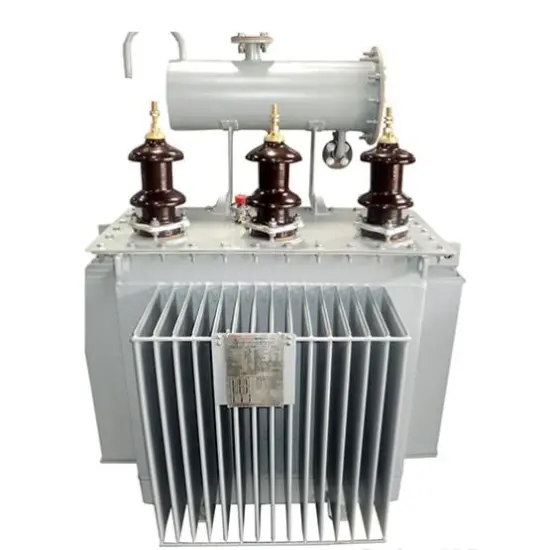
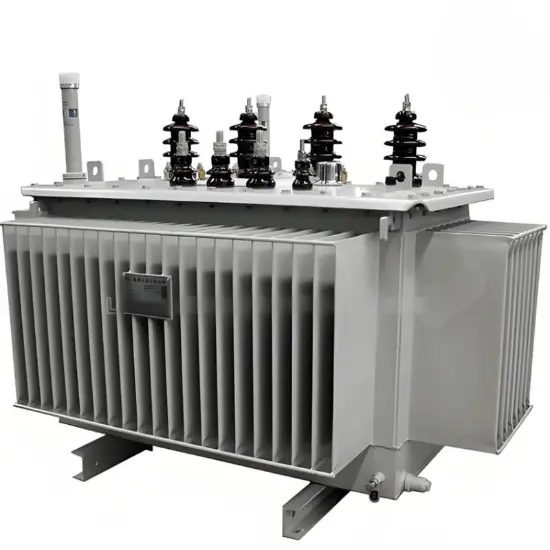
- Earthing Transformer: Provides controllable neutral point earthing impedance (fixed/adjustable resistance, reactance or composite type), limits fault zero-sequence current amplitude, and provides a stable neutral point reference for SVG/APF.
- SVG (Static Var Generator): Rapidly compensates for reactive power deficits of impact loads (response time <5ms), boosts voltage amplitude during sag events, and maintains voltage above 0.9 p.u.
- APF (Active Power Filter): Targets and filters major zero-sequence/negative-sequence harmonics such as 3rd, 5th and 7th order, reduces THD, and eliminates harmonic resonance risks.
- Collaborative Interface: The three devices are interconnected via a shared IEC 61850 communication bus to achieve data sharing and command synchronization.
2.2 Control Layer: Multi-Objective Coordinated Control Algorithm
- Voltage Sag Priority Control: When voltage drop >10% is detected, SVG immediately injects capacitive reactive power to boost voltage; the earthing transformer switches to low-impedance mode to reduce zero-sequence voltage drop; APF synchronously suppresses harmonic amplification caused by sag.
- Harmonic & Unbalance Governance: During steady-state operation, APF takes the lead in harmonic cancellation, and the earthing transformer fine-tunes impedance to break harmonic resonance conditions (avoiding current surge caused by minimal impedance at a certain harmonic order).
- Fault Ride-Through & Protection: During earth faults, the earthing transformer limits fault current; SVG/APF switch to fault ride-through mode to prevent overcurrent damage, and assist relay protection in quickly locating the fault phase.
2.3 Strategy Layer: Scene-Adaptive Operation Mode Library
Preset multiple industrial scene modes, which automatically switch according to real-time load and grid status:
- Impact Load Mode (motor group startup, arc furnace switching): High-dynamic reactive power support by SVG + fast response of earthing transformer with low impedance.
- Steady-State Precision Machining Mode: High-precision harmonic suppression by APF + fixed impedance of earthing transformer to ensure zero-sequence balance.
- Fault Emergency Mode: Fault current limitation by earthing transformer + SVG/APF entering protection state to ensure short-time power supply for critical loads.
3. Scenario-Based Strategy Implementation: From General Solution to Industry Customization
Targeting power quality pain points in different industrial scenarios, the collaborative strategy is refined:
| Scenario | Core Disturbance Characteristics | Collaborative Strategy Focus | Expected Indicators |
|---|---|---|---|
| Precision Machining Workshop | Voltage sag sensitivity (alarm triggered when ≤0.8 p.u.), harmonics mainly from frequency converters | APF prioritizes suppression of 5th/7th order harmonics; SVG maintains voltage ≥0.95 p.u.; earthing transformer adopts fixed low impedance | 90% reduction in voltage sag occurrences, THD <3% |
| Arc Furnace Steel Plant | Severe current fluctuations (±50%), prominent zero-sequence harmonics | SVG quickly tracks reactive power changes; earthing transformer uses adjustable reactance to suppress zero-sequence resonance; APF filters 3rd/9th order harmonics | 70% reduction in voltage fluctuation rate, three-phase unbalance degree <1% |
| Electronic Manufacturing Assembly Line | Parallel connection of multiple sensitive devices, susceptible to common-mode interference | Earthing transformer adopts star-delta hybrid earthing to optimize zero-sequence loop; APF suppresses common-mode harmonics; SVG ensures bus voltage stability | 95% reduction in equipment false shutdown rate, 5% improvement in product yield |
4. Effect Closed Loop: Quantitative Benefits and Standard Compliance
- Voltage Sag Suppression: Voltage sag amplitude recovery time <20ms; the proportion of time that sensitive load voltage is maintained above 0.9 p.u. ≥99.9% (compliant with IEC 61000-4-30 Class 1).
- Power Quality Enhancement: THD reduced from 8%–12% before retrofit to <3%; three-phase unbalance degree <1%; zero-sequence harmonic current reduced by over 80%.
- Economic Benefits: After retrofit of a semiconductor factory, shutdown losses caused by power quality issues were reduced from 480 hours per year to <10 hours, recovering over 20 million yuan in annual output value.
- Standard Compliance: Meets international specifications including IEC 61000-4-30 (power quality measurement), IEC 61850 (communication interoperability), and IEEE 519 (harmonic control).
5. Conclusion
Breaking away from the single-device governance mindset, this solution identifies the root causes of power quality degradation through problem link mapping, breaks down functional barriers between earthing transformers, SVG and APF via a three-dimensional collaborative architecture, and realizes the implementation from general technology to industry customization through scenario-based strategies. Its core is to upgrade the earthing transformer from a "passive earthing device" to an "active power quality governance hub". While suppressing voltage sags, eliminating harmonics and imbalance, it builds a high-reliability power quality defense line for industrial sensitive loads, and possesses replicability and promotion value in global industrial scenarios.
Recent Solutions