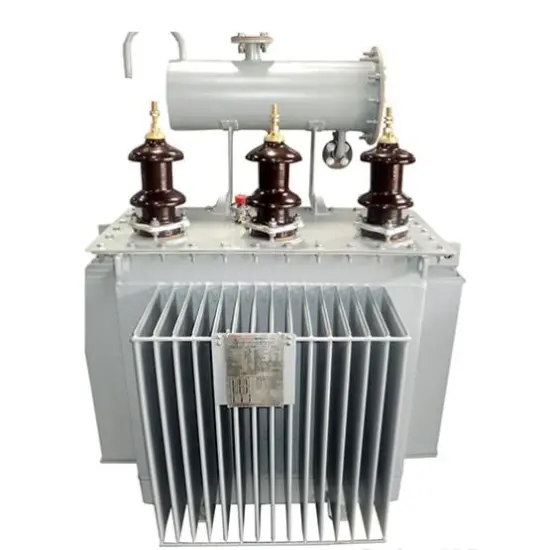
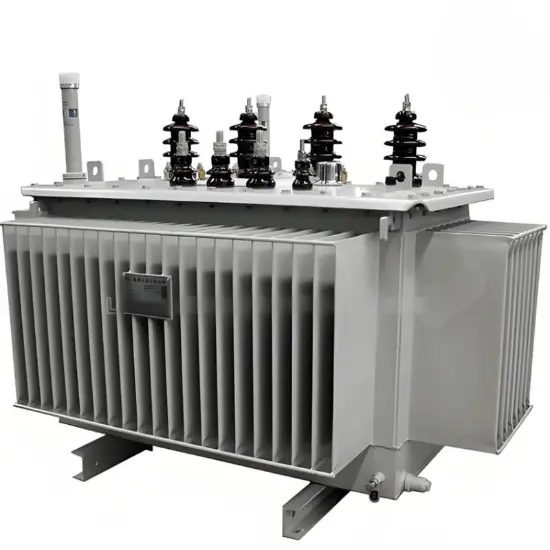
Intelligent Rapid Isolation and Grid Self-Healing Collaborative Solution for High-Voltage Transformers
Intelligent Rapid Isolation and Grid Self-Healing Collaborative Solution for High-Voltage Transformers-Systematic Innovation Based on Multi-Source Sensing, Digital Twin and Active Defense
1. Background and Challenges: Limitations of Traditional Solutions and Emerging Demands
2. Core Philosophy: Building a Four-Dimensional Collaborative System of "Sensing-Decision-Execution-Evolution"
3. Innovative Solution Architecture
3.1 Full-Element Intelligent Sensing Layer: Enabling Transformers to "Speak and Warn"
- Holographic Sensing of Ontology Status: Deploy fiber Bragg grating sensors (monitoring winding temperature/deformation with ±0.5℃ accuracy), ultra-high frequency (UHF) partial discharge sensors (capturing insulation defect discharge signals with pC-level resolution), and vibration acceleration sensors (identifying core loosening/short-circuit impact with 0.1–10kHz frequency response range). Replacing traditional offline oil chromatography testing, it achieves millisecond-level sampling and micro-damage-level sensing of key parameters.
- Dynamic Sensing of Operating Environment: Integrate weather stations (temperature, humidity, wind speed), video AI cameras (identifying equipment appearance anomalies), SF₆ gas leakage monitoring modules (for GIS transformers), and combine satellite remote sensing data (regional lightning/wildfire early warning) to build multi-dimensional labels for equipment "health profiles".
- Edge Intelligent Preprocessing: Deploy lightweight AI chips (computing power ≥4TOPS) at transformer terminals to filter noise data in real time and extract feature quantities (e.g., partial discharge pulse phase distribution, vibration spectrum centroid offset). Only "valid abnormal events" are uploaded to the cloud, reducing communication bandwidth usage by 90%.
3.2 Digital Twin Decision-Making Layer: Enabling Faults to "Be Reproduced and Deducted"
- Multi-Physical Field Coupling Simulation: Integrate electromagnetic transient (EMTP), thermodynamics (Fluent) and structural mechanics (ANSYS) models to simulate the evolution path of typical faults such as short-circuit impact, local overheating and insulation aging (e.g., time-series prediction of "winding hot spot → insulation carbonization → turn-to-turn short circuit"), enabling early warning of potential risk points 72 hours in advance.
- Accurate Fault Location and Root Cause Diagnosis: When the sensing layer triggers an anomaly (e.g., 3-fold sudden increase in partial discharge amplitude), the twin body injects real-time data synchronously. By comparing simulated waveforms under normal/fault conditions, it automatically matches fault types (distinguishing lightning overvoltage, internal turn-to-turn short circuit and external ground fault), with location error ≤0.5m (traditional protection location error ≥2m) and root cause diagnosis accuracy ≥98%.
- Dynamic Optimization of Isolation Strategies: Based on grid topology (including renewable energy power stations and energy storage nodes), load priority (hospitals/data centers prioritized for power supply) and equipment health status (remaining life prediction), a reinforcement learning algorithm (trained with ≥100,000 historical fault cases) generates a minimum-impact isolation scheme. For example, when a main transformer fails, sensitive loads are preferentially transferred to adjacent substations instead of directly cutting off the entire area, reducing the number of affected users by over 40%.
3.3 Active Defense Execution Layer: Enabling Isolation to Be "Fast, Accurate, Stable and Low-Impact"
- Millisecond-Level Rapid Isolation Device: Equip the high and low voltage sides of transformers with "broadband electronic transformers + high-speed switches" (operation time ≤5ms, compared with ≥50ms for traditional electromagnetic switches). Combined with fault prediction commands from the digital twin, it realizes "tripping immediately upon fault characteristic confirmation", preventing fault expansion (e.g., avoiding winding burnout caused by short-circuit current).
- Adaptive Power Flow Reconfiguration: Linkage with the grid dispatching system, dispatch energy storage power stations (power response ≤100ms) and flexible DC converters (power flow regulation accuracy ±1%) to automatically adjust the power flow distribution of surrounding lines while isolating the faulty transformer, ensuring that voltage fluctuations in non-fault areas ≤±2% (national standard requirement ≤±5%).
- Anti-Maloperation Redundant Design: Adopt a triple-criterion mechanism of "electrical quantity + non-electrical quantity + digital twin verification" (e.g., tripping is executed only when partial discharge signal + vibration anomaly + twin body simulation matching degree >95%), reducing the maloperation rate from 0.5% (traditional) to below 0.01%.
3.4 Self-Healing Closed-Loop Evolution Layer: Enabling Power Grids to "Grow Stronger with Each Recovery"
- Quantitative Evaluation of Self-Healing Effects: Compare load recovery rate (target ≥99%), power outage duration (target ≤3 minutes) and equipment damage degree (target: no permanent damage) before and after faults to generate a "disposal efficiency report".
- Dynamic Knowledge Base Update: Store fault characteristic parameters (e.g., special partial discharge waveforms, vibration spectra) and disposal strategies (e.g., optimal load transfer paths) into the AI model training library, iterating the diagnosis algorithm monthly, which shortens the subsequent location time of similar faults by 20%.
- Resilient Grid Enhancement: Based on evaluation results, automatically optimize transformer maintenance plans (e.g., increasing inspection frequency of high-risk equipment from quarterly to weekly) and adjust grid topology (e.g., adding tie lines to improve mutual supply capacity), promoting the evolution of power grids from "fault recovery" to "risk immunity".
4. Implementation Benefits: From "Safe Power Supply" to "Value Creation
- Reliability Leap: Compress transformer fault isolation time from 30 minutes to ≤30 seconds, achieve grid self-healing success rate ≥99.9%, and reduce annual average user power outage time from 8 hours to less than 1 hour.
- Economic Optimization: Reduce faulty equipment damage losses (main transformer repair cost is about 5 million RMB per unit); cut power outage compensation costs (saving over 10 million RMB annually based on 100,000 RMB per hour loss for key users); avoid unnecessary waste of power generation resources through precise load transfer, achieving annual coal saving and carbon reduction equivalent to that of a small thermal power plant.
- Operation and Maintenance Model Innovation: Shift from "time-based maintenance" to "condition-based maintenance", reducing operation and maintenance manpower input by 60% and extending equipment service life by 15%–20%.
5. Conclusion and Outlook