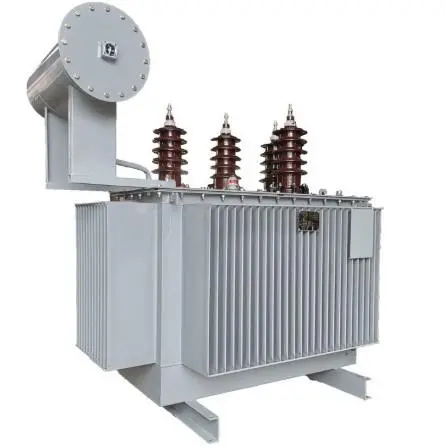
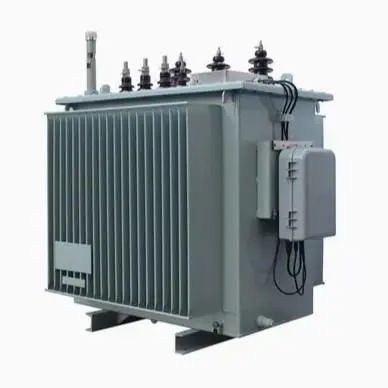
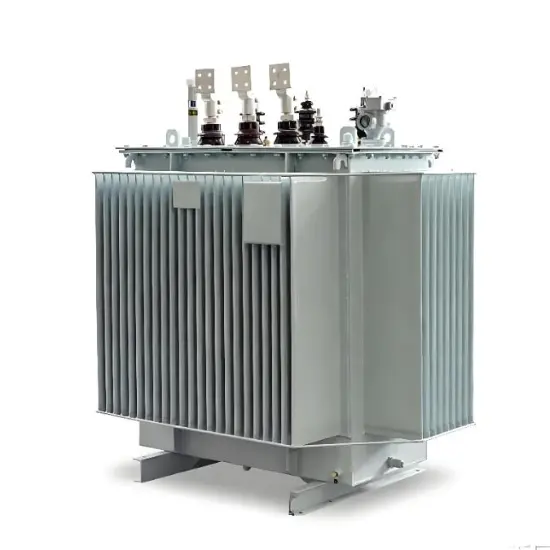
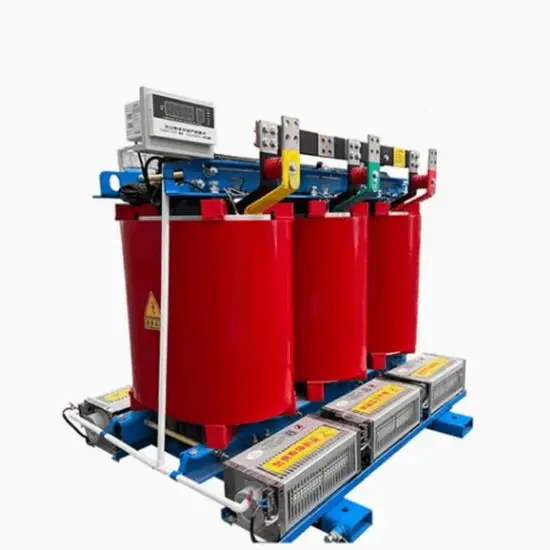
Customized power solutions for industries such as electric utilities, new energy, and industrial manufacturing.
Intelligent and Condition-Aware Upgrade Path for Grounding Transformers in Renewable Energy Systems
1. Operational and Safety Challenges of Non-Intelligent Grounding Systems
In today’s vast fleet of operational wind and solar power plants, grounding transformers remain largely “dumb devices”—traditional dry-type or oil-immersed units lacking sensors, communication capabilities, or self-diagnostic functions. Under the high volatility, high renewable penetration, and severe environmental stresses of modern power systems, this non-intelligent design reveals critical shortcomings:
- Reactive fault response: Equipment status is invisible; grounding faults are often only detected after inverter trips or protection actions, with average fault localization times exceeding 10 hours—amplifying energy loss.
- Inability to predict insulation degradation: Hidden risks such as winding moisture ingress, localized overheating, or resin cracking go undetected until catastrophic failure occurs, potentially triggering cascading damage to pad-mounted transformers or collector lines.
- Experience-dependent maintenance: Remote sites lack skilled technicians; on-site diagnostics rely on rudimentary methods (“listen, look, touch”), leading to high misdiagnosis rates and exorbitant access costs (e.g., chartering speedboats to island sites at > $ 800 per visit).
- Data silos hinder decision-making: Grounding systems operate in isolation, disconnected from SCADA or energy management platforms, preventing integration into holistic asset health assessments or lifetime predictions.
These issues not only inflate O&M expenses but also act as a hidden bottleneck to renewable plant availability and asset reliability.
2. Transformation Through Intelligence and Condition Awareness: The “Makassar Green Energy 120 MW” Project in Indonesia
To overcome these challenges, intelligent grounding transformers integrate multi-source sensing, edge computing, and remote communications—enabling a leap from passive protection to proactive health management. The core lies in a triad architecture: condition awareness + intelligent decision-making + closed-loop feedback.
At the “Makassar Green Energy 120 MW” solar-plus-storage project in South Sulawesi, Indonesia—located on the western coast of Sulawesi Island in a tropical rainforest climate with 90% average humidity and over 80 thunderstorm days per year—the team deployed two fully condition-aware intelligent dry-type Zig-Zag grounding transformers, directly compared against legacy non-smart units at the same site.
Jointly invested by Indonesia’s state utility PLN and a Singapore-based green fund, the project demanded exceptional reliability and digital readiness. Key features of the smart grounding system include:
- Amorphous metal core + H-class epoxy resin vacuum casting;
- Embedded fiber Bragg grating (FBG) temperature sensors, zero-sequence CTs, and micro-moisture monitoring modules;
- Dual-mode LoRaWAN + 4G communication for reliable data transmission in low-connectivity areas;
- Integration with local SCADA and a Bahasa Indonesia O&M mobile app, supporting offline QR-code access to historical trends.
After six months of operation, results were striking:
| Comparison Dimension | Non-Intelligent Transformer (Control Group) | Intelligent Condition-Aware Transformer (Implementation Group) |
|---|---|---|
| Status Visibility | No monitoring; quarterly inspections only | Real-time upload of temperature, zero-sequence current, insulation status |
| Fault Early Warning | No warning; post-failure tripping | Successfully predicted winding moisture risk 5 days in advance |
| Fault Response Time | Avg. repair time: 22 hrs (technicians dispatched from Makassar) | Remote guidance to local staff; MTTR < 3 hrs |
| Equipment Availability | 2 outages due to grounding issues | Zero outages |
| O&M Cost | ~ $ 1,200 per incident | Near-zero cost via remote resolution |
| Compliance & Financing | Failed PLN digital integration requirement | Certified as PLN “Smart Plant Pilot,” accelerating green loan approval |
Critically, during a severe thunderstorm in March 2025, the intelligent system detected abnormal zero-sequence current fluctuations, automatically issued an alert, and recommended switching to low-resistance grounding mode—successfully preventing a potential arc-induced overvoltage event and protecting > $ 2 million worth of battery inverters.
3. Conclusion and Future Trends: From Smart Sensing Toward Autonomous Operation
Intelligence and condition awareness are redefining the value proposition of auxiliary equipment in renewable energy. The grounding transformer is no longer just a “safety baseline”—it has become a critical node in the plant’s digital foundation. Its strategic impact includes:
- Proactive safety: Shifting fault management from reactive response to predictive prevention;
- Lean operations: Enabling data-driven resource allocation to reduce LCOE (Levelized Cost of Energy);
- Asset transparency: Providing credible data for ESG reporting, carbon accounting, and insurance underwriting.
Looking ahead, three key trends will shape this domain:
- Multi-Parameter Fusion: Integrated sensing of temperature, partial discharge, vibration, and humidity to build high-dimensional health profiles;
- Edge Intelligence: Lightweight AI models deployed directly on devices for “local diagnosis, local decision-making”;
- System Autonomy: Closed-loop coordination with grid-forming inverters and storage systems to enable self-sustaining microgrid operation through “sense–analyze–control” cycles.
In emerging Southeast Asian markets like Indonesia, Malaysia, and Thailand—where digital infrastructure is uneven but environmental stress and limited O&M capacity are acute—intelligent grounding systems deliver exceptionally high marginal value. In the evolving “cloud-edge-device” architecture of next-generation power systems, deeply aware, intelligent grounding transformers will serve as the digital nerve endings safeguarding the safe, efficient, and sustainable delivery of clean energy.
Recent Solutions