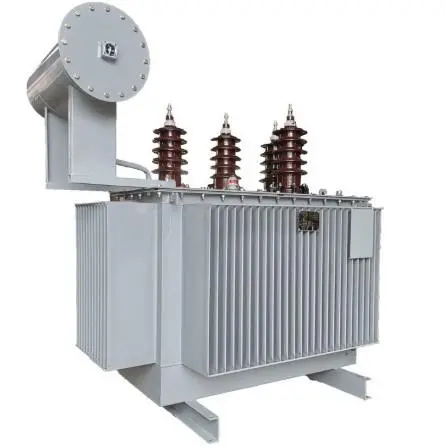
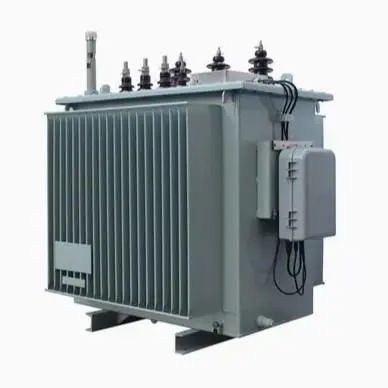
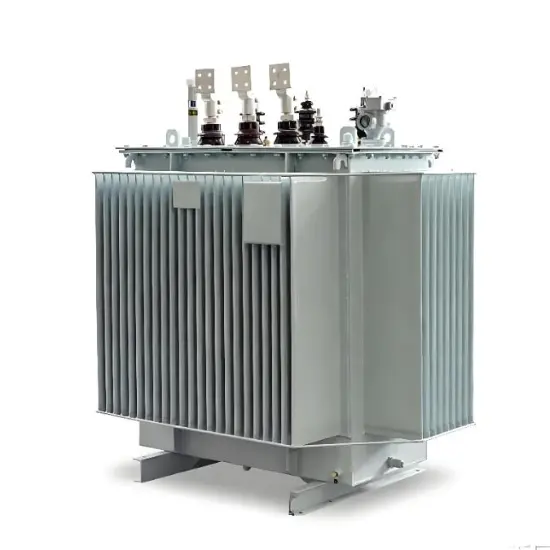
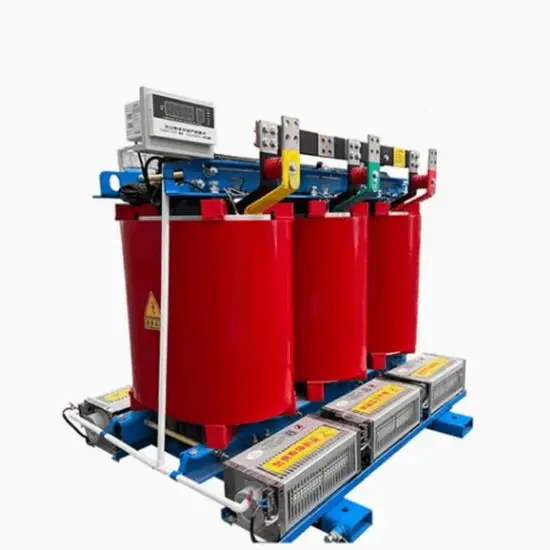
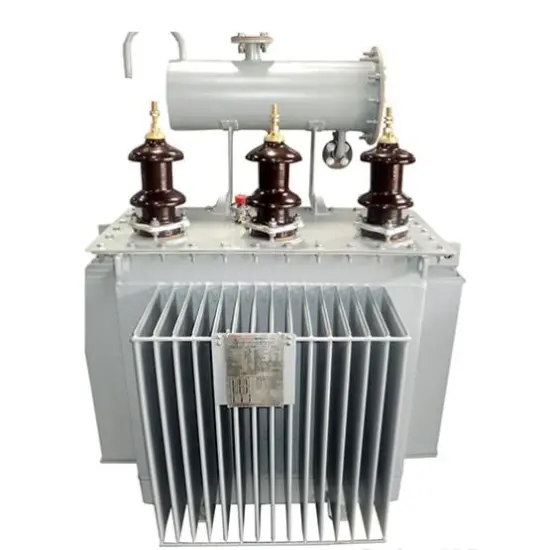
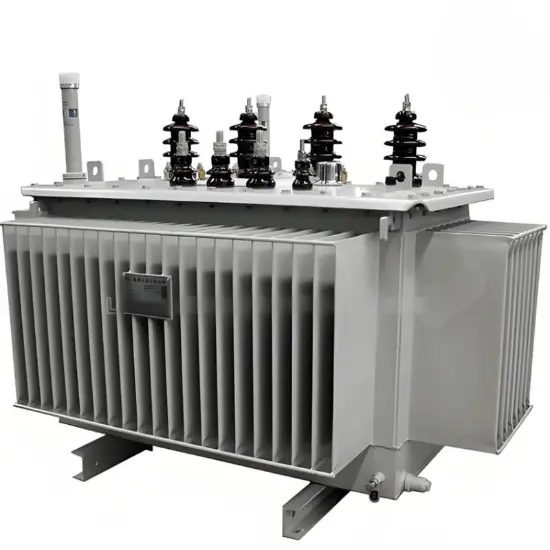
Grounding Transformers: Essential Components for Modern Power Systems Stability and Resilience
As a critical element for power system stability, grounding transformers have become indispensable equipment for grid modernization and renewable energy integration due to their unique capabilities in neutral point creation, fault current limitation, and system stability enhancement. With increasing demands for grid resilience and renewable penetration, grounding transformers are evolving from passive components into intelligent, adaptive grounding nodes by integrating advanced monitoring technologies, adaptive resistance control, and predictive maintenance capabilities. Based on the latest technical specifications and application scenario analysis, this solution proposes optimal configuration and intelligent enhancement strategies for grounding transformers in modern power systems, aiming to improve system reliability, reduce downtime, and support sustainable grid development.
1. Analysis of Technical Features and Advantages of Grounding Transformers
1.1 Core Design Philosophy
Utilizes specialized winding configurations (Zigzag or Wye-Delta) to create artificial neutral points in ungrounded or delta-connected systems, enabling effective ground fault current management with minimum impact on normal operation. According to the 2025 IEEE C57.116 Standard for Grounding Transformers, temperature rise limits are strictly controlled (≤65K for oil-immersed, ≤80K for dry-type), with short-circuit withstand capability exceeding 25kA for 2 seconds.
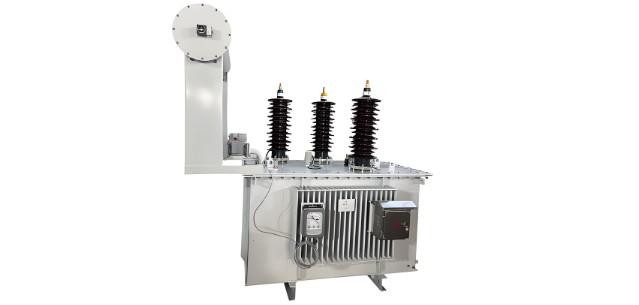
1.2 Six Core Advantages
- Fault Current Control: Limits ground fault current to safe levels (typically 200-1000A), preventing equipment damage while maintaining sufficient current for protective relay operation.
- Transient Overvoltage Suppression: Reduces transient overvoltages during single-line-to-ground faults by 60%-80%, protecting sensitive equipment like inverters and power electronics.
- Zero-Sequence Current Management: Provides controlled zero-sequence current path, preventing harmonic amplification and resonance issues in power electronic rich systems.
- System Flexibility: Enables integration of renewable resources into existing ungrounded systems without major infrastructure modifications.
- Enhanced Protection Coordination: Improves coordination between protective devices by providing predictable fault current magnitude and duration.
- Reliability Enhancement: Prevents cascading failures during ground faults, reducing outage duration by 40%-60% compared to ungrounded systems.
1.3 Technical Structure Classification
| Type | Configuration | Key Features | Application Preference |
| Zigzag (ZNyn) | Six-winding configuration with inter-connected phases | Lowest zero-sequence impedance (1.1-1.8 p.u.), no phase shift, inherent harmonic cancellation capability. Short-circuit withstand: 25kA/2s. | Renewable integration, data centers, hospital power systems where phase shift is undesirable |
| Wye-Delta (YNd11) | Primary wye with neutral brought out, secondary delta | Higher zero-sequence impedance (3.0-5.0 p.u.), provides auxiliary power from delta winding, can handle continuous unbalanced loads. | Utility substations, industrial plants, applications requiring station service power |
| Resonant Grounding | Wye-Delta with Peterson coil integration | Automatically tuned reactor compensates capacitive fault current, limiting residual current to <5A. Adaptive tuning range: 50-95% compensation. | Mining operations, critical infrastructure where service continuity during faults is paramount |
2. Typical Application Scenarios and Configuration Plans
2.1 Distribution Network Scenario
Case: Urban 11kV distribution network with high cable penetration (total cable length 35km), experiencing repeated insulation failures due to transient overvoltages.
Configuration Recommendations:
- Type: 8MVA Zigzag grounding transformer with 400A neutral grounding resistor (NGR)
- Protection System: Dual neutral current measurement (CT + Rogowski coil), neutral displacement voltage monitoring
- Monitoring: Fiber optic temperature sensors on hottest spots, partial discharge monitoring
- Special Features: Built-in surge arresters on neutral point (15kV class), automatic fault recording with 1ms resolution
2.2 Renewable Energy Integration Scenario
Case: 50MW solar farm with 33kV collector system requiring effective ground fault protection while minimizing downtime.
Configuration Recommendations:
- Capacity: 12.5MVA Wye-Delta grounding transformer with dual 6.25MVA units for redundancy
- Adaptive Grounding: Motorized tap changer on NGR for automatic adjustment based on irradiance conditions
- Intelligent Monitoring: Cloud-based analytics platform with AI-powered fault prediction, 5G connectivity
- Special Features: Enhanced harmonic filtering (3rd, 5th, 7th), anti-islanding protection coordination with inverters
2.3 Industrial Power System Scenario
Case: Semiconductor manufacturing facility with 13.8kV ungrounded system, experiencing production interruptions due to intermittent ground faults.
Configuration Recommendations:
- Capacity: 5MVA Zigzag grounding transformer with high-accuracy (±2%) neutral grounding resistor
- Protection Requirements: Sub-cycle fault detection (<16ms), automatic reclosing sequence with adaptive timing
- Power Quality: Integrated harmonic filters, voltage sag mitigation through fast grounding resistance adjustment
- Special Features: Redundant cooling system (N+1 configuration), seismic qualification for Zone 4 (0.6g horizontal acceleration)
2.4 Comparison of Key Parameters Across Three Scenarios
| Application Scenario | Capacity Range | Neutral Current Rating | Special Requirements | Monitoring Level |
| Distribution Network | 4-16MVA | 200-600A continuous, 2hr rating | Transient overvoltage suppression, high BIL rating | Basic: temperature, current, voltage |
| Renewable Integration | 8-25MVA | 300-1000A intermittent, 10s rating | Adaptive resistance control, harmonic mitigation | Advanced: partial discharge, thermal imaging, cloud analytics |
| Industrial System | 2-10MVA | 100-400A continuous, precision ±2% | Sub-cycle fault clearing, minimal downtime design | Premium: real-time diagnostics, predictive maintenance, system integration |
3. Economic Benefit Analysis
3.1 Investment Cost Savings:
Example: 33kV distribution system with 15km cable network:
- Implementation of grounding transformer system reduces insurance premiums by 22% due to reduced fire risk
- Eliminates need for extensive cable shielding upgrades, saving approximately ¥850,000
- Reduces required spare parts inventory by 35% through improved equipment protection
3.2 Operation & Maintenance Cost Reduction:
Adoption of intelligent monitoring and predictive maintenance reduces:
- Unscheduled downtime by 65% (equivalent to ¥420,000/year savings for a medium industrial facility)
- Maintenance labor costs by 30% through condition-based maintenance scheduling
- Equipment replacement frequency by 45% through improved protection against transient events
3.3 Integrated Solution Economics (2025 Trend):
With declining costs of monitoring technologies and AI analytics (system cost decreased 40% since 2022):
- "Smart Grounding Transformer + AI Analytics" solution achieves payback period of 2.3 years through reduced outage costs
- Combined with renewable integration, improves project ROI by 18-25% through enhanced system availability
Key Data Table
| Item | Grounding Transformer Benefit |
| 33kV System Protection Upgrade | Saves ¥850,000 in cable shielding costs |
| Annual Downtime Reduction | 65% reduction (¥420,000/year value) |
| Equipment Lifespan Extension | 35% longer service life for protected assets |
| Integrated Solution Payback Period | ≤2.5 years (with AI monitoring and analytics) |
4. Grounding Transformer Implementation Strategies
4.1 Priority in New Construction:
Prioritize integration of smart grounding transformers in new distribution networks, renewable projects, and industrial facilities, particularly in areas with:
- High lightning activity (Keraunic level >30 days/year)
- Significant cable penetration (>50% of network)
- Critical loads requiring high reliability (data centers, hospitals, manufacturing)
4.2 Grid Modernization and Retrofit:
Implement phased upgrades of existing ungrounded or high-resistance grounded systems:
- Phase 1: Install monitoring equipment to assess existing system grounding performance
- Phase 2: Deploy targeted grounding transformer installations at critical nodes
- Phase 3: Implement system-wide adaptive grounding strategy with centralized control
4.3 Low-Carbon Energy Transition Support:
Deploy advanced grounding solutions specifically designed for renewable integration:
- Hybrid grounding systems supporting both conventional generation and inverter-based resources
- Adaptive resistance control algorithms that optimize grounding based on generation mix
- Grid-forming inverter coordination protocols ensuring proper fault contribution during ground faults
As power systems continue their transition toward higher renewable penetration and digitalization, grounding transformers will evolve from passive components into active grid management tools. The next generation of grounding systems will feature self-healing capabilities, blockchain-secured configuration management, and integration with grid-edge intelligence platforms, ultimately contributing to more resilient, sustainable, and intelligent power infrastructure.