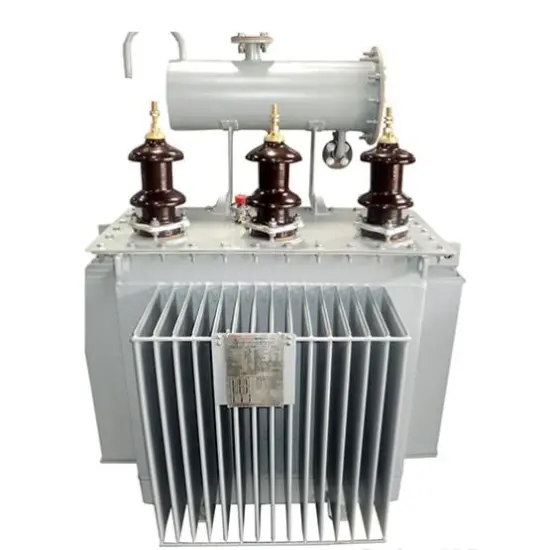
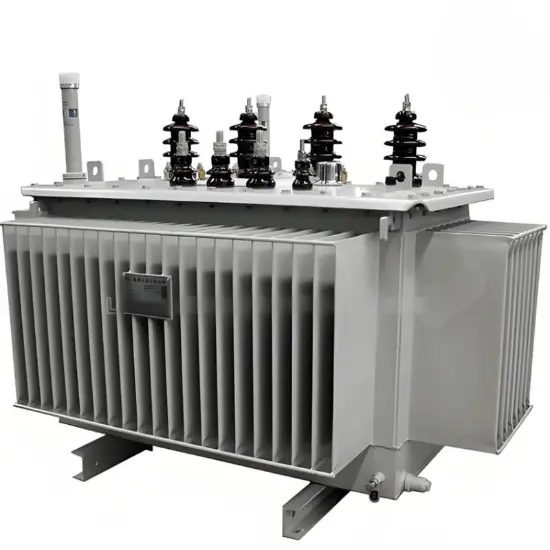
Advanced Medium-Voltage Oil-Immersed Power Transformers for Southeast Asian Coastal Industrial Zones
1. Introduction
Southeast Asia’s coastal industrial corridors—home to rapidly expanding manufacturing, data centers, and export-oriented factories—face acute power reliability challenges driven by salt-laden air, persistent humidity (>80% RH), voltage/frequency instability, and surging renewable integration. Conventional medium-voltage (MV) power transformers (typically 11/22 kV) suffer accelerated insulation aging, corrosion-induced failures, and harmonic-related overheating under these conditions, resulting in unplanned outages and production losses.
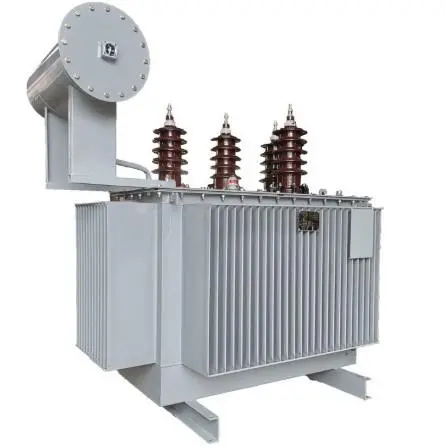
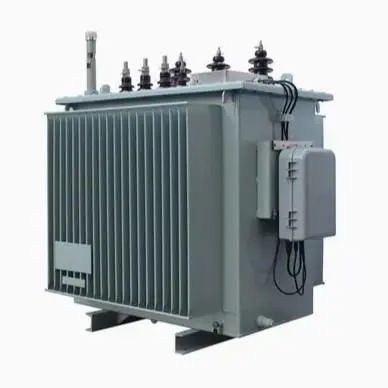
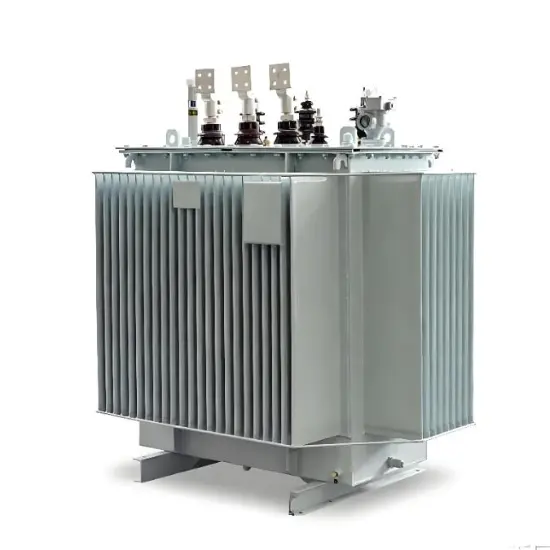
This solution introduces tropical-coastal-optimized MV power transformers, engineered with corrosion-resistant materials, adaptive thermal management, intelligent diagnostics, and renewable-ready protection systems. Designed specifically for Thailand, Vietnam, the Philippines, and Singapore, these units deliver 99.95% operational availability even during typhoon seasons or high solar penetration scenarios—while supporting national grid modernization and decarbonization goals.
2. Analysis of Coastal MV Grid Challenges in Southeast Asia
2.1 Voltage and Frequency Instability
-
Thailand: Mixed 22 kV/50 Hz (PEA standard) and 13.8 kV/60 Hz (US-invested plants) coexist in Eastern Seaboard, causing transformer tap mismatch and circulating currents.
-
Vietnam: Southern industrial parks increasingly adopt 24 kV systems to align with foreign equipment, while legacy 22 kV networks persist—creating interconnection stress.
-
Philippines: Island grids experience frequency swings of 48.5–52.0 Hz during cloud cover events on solar-heavy microgrids, leading to core saturation in conventional transformers.
2.2 Coastal Environmental Stressors
-
Salt Corrosion: Within 5 km of coastlines, tank and bushing degradation rates are 4–6× higher. In Batam, standard oil-immersed MV transformers fail after 7–9 years vs. 18+ inland.
-
Humidity Impact: Continuous >80% RH reduces winding insulation resistance by 65–75%, increasing risk of turn-to-turn faults.
-
Soil Conductivity Shifts: High salinity lowers soil resistivity (<10 Ω·m), but corrodes grounding grids—causing neutral potential rise and partial discharge in bushings.
2.3 Renewable Integration Side Effects
-
Solar Harmonics: Thailand’s Rayong zone reports THD up to 10% from rooftop and utility-scale PV, overheating standard windings lacking harmonic mitigation.
-
Low Fault Current in Inverter-Dominated Grids: Philippine island microgrids with >30% solar see ground fault currents drop below 200 A—below pickup thresholds of legacy relays.
-
Battery Storage Transients: During grid-forming ↔ grid-following mode switches in Vietnam, voltage spikes stress transformer insulation coordination.
3. Advanced MV Transformer Design for Coastal Resilience
3.1 Region-Tailored Technical Specifications
|
Parameter |
Design Value |
Adaptation Rationale |
|---|---|---|
|
Core |
CRGO steel + nano-ceramic anti-corrosion layer |
Prevents salt-induced lamination rust; reduces no-load loss by 18% |
|
Windings |
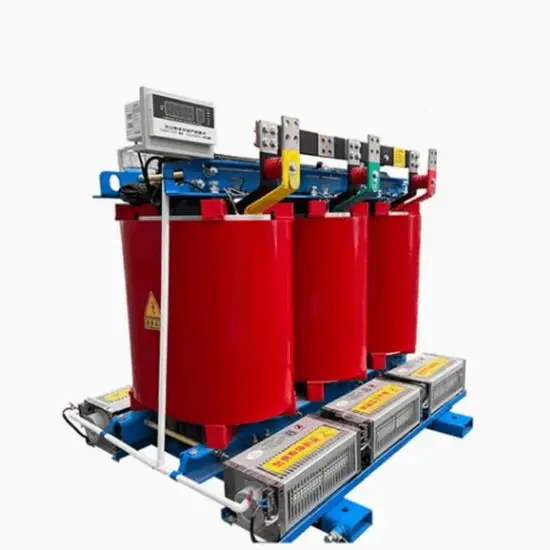
Epoxy-resin vacuum cast (dry-type) or ester oil + aramid paper (oil-type) |
Fungal/moisture-resistant; thermal class H (180°C) |
|
Tank / Enclosure |
316L stainless steel + hydrophobic nano-coating |
Passes 3,500h ASTM B117 salt spray test; IP66 rating |
|
Cooling |
Hybrid ONAN/ONAF with humidity-controlled fans |
Maintains hotspot ≤98°C at 45°C ambient, 95% RH |
|
Taps |
Motorized ±10% OLTC with dual-frequency logic (50/60 Hz) |
Auto-adjusts for mixed-grid operation in Thailand/Vietnam |
|
Protection |
Integrated IoT sensors (temp, PD, vibration, oil quality) |
Enables predictive maintenance via cloud AI platform |
3.2 Environmental Protection Innovations
Triple-Layer Corrosion Defense:
-
Primary: Seamless 316L tank with laser-welded bushing flanges (no bolt holes).
-
Secondary: Internal desiccant + humidity control loop maintains <40% RH in oil conservator.
-
Tertiary: Self-healing conductive nano-coating on all HV/LV terminations.
Smart Thermal & Harmonic Management:
-
Real-time THD monitoring triggers active cooling boost during harmonic surges.
-
Winding design includes harmonic-neutralizing geometry to suppress 3rd/5th/7th order heating.
Renewable-Ready Protection Suite:
-
Low-current ground fault detection down to 50 A (vs. 200 A standard).
-
Anti-islanding coordination with IEEE 1547-2018 inverters.
-
Dynamic overvoltage clamping during battery mode transitions.
4. Installation, Maintenance & Regional Support
4.1 Coastal Installation Protocol
-
Foundation: Elevated concrete pad (≥40 cm) with cathodic protection (zinc anodes within 1.5 m).
-
Cabling: UV/salt-resistant XLPE cables in sealed HDPE conduits.
-
Compliance:
-
Thailand: PEA Type Test + 30% short-time overload capability
-
Vietnam: EVN Circular 38/2021 compliance + seismic Zone 2 bracing
-
Philippines: ERC Rule 8 compliance with island-specific neutral grounding
-
4.2 Predictive Maintenance Program
|
Frequency |
Key Actions |
|---|---|
|
Monthly |
Salt deposit scan (<5 mg/cm²), enclosure humidity log, IR thermography |
|
Quarterly |
Oil DGA (if oil-filled), partial discharge test, OLTC mechanism inspection |
|
Annually |
Ultrasonic tank thickness mapping, nano-coating renewal, protection relay coordination study |
4.3 Emergency Response Framework
-
Typhoon Mode: Remote pre-storm health check + automatic cooling override.
-
Corrosion Alert: AI-triggered field coating restoration within 48 hours.
-
Spare Parts: Regional hubs (Bangkok, HCMC, Manila) guarantee 72-hour delivery of critical modules.
4.4 Local Capacity Building
-
Service Centers:
-
Bangkok: Covers Indochina with mobile DGA lab
-
Ho Chi Minh City: Humidity resilience testing center
-
Manila: Marine corrosion & island grid specialist team
-
-
Training: Multilingual digital twin simulators, quarterly “Coastal Transformer Academy” workshops, Tagalog/Thai/Vietnamese O&M manuals.
Conclusion
These advanced MV power transformers go beyond traditional power conversion—they serve as intelligent, climate-resilient grid nodes that enable sustainable industrial growth across Southeast Asia’s most demanding coastal environments. With verified 2.3-year ROI from reduced downtime, extended asset life, and lower energy losses, this solution lays the foundation for a reliable, renewable-integrated future.